Story and photos by Judy Benson
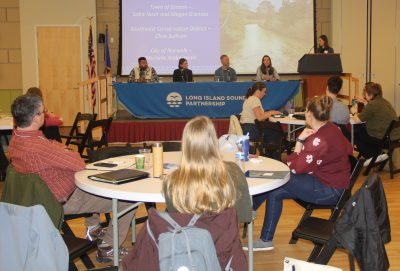
The 62 people gathered in the large room at Gateway Community College in New Haven on March 31 came from urban, rural and suburban communities of all income levels, yet they had some important characteristics in common.
“Who cares about resilience?” asked Sylvain De Guise, Connecticut Sea Grant director, in his opening remarks at the 3rd annual Sustainable and Resilient Communities Funding Workshop. “Who needs money for those projects? The people who have the money and the people who need it are all in the same room.”
The workshop brought together representatives of state, federal and private funding agencies with municipal officials, local nonprofits, conservation, planning and other groups. Like plotting a route on a map toward a destination, the workshop was designed to introduce different funding pathways available to those planning projects to make their communities less vulnerable to impacts of flooding, severe storms and other hazards.
“The SRC Communities program goal is to plan for and respond to environmental challenges in ways that prioritize well-being for all,” said Deb Abibou, who leads CT Sea Grant’s SRC work in western Connecticut.

“Lightning Talks” from 17 different presenters representing 26 programs led the daylong event. Each was like a nutrition-rich smoothie, quick to swallow but full of useful content, from match requirements to deadlines to topical parameters and amounts of funding available through various programs.
“We will fund planning or implementation of a project to address nonpoint source pollution,” Erik Bedan, supervising environmental analyst for the Connecticut Department of Energy and Environmental Protection’s Watersheds Program, said during his talk. “We really need to see milestones, and measurable outcomes.”
After the talks, four representatives of groups that had received resilience project grants answered questions submitted by the audience to Abibou, the panel moderator.
“How do you decide which grants to pursue?” was her first question.
“We’re looking for something that someone has already done the design on,” said panelist Chris Sullivan of the Southwest Conservation District. “It’s also really important to have active partners in the project.”
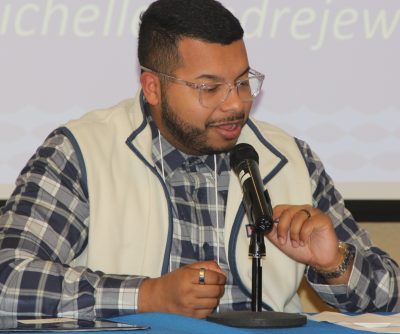
After the panel, the presenters and attendees spent an hour sharing contact information and networking one-on-one.
“One of the biggest takeaways from the workshop is the importance of building relationships early in the proposal process, connecting with funders, asking questions and being open about uncertainties,” said Sarah Schechter, who leads the SRC work in eastern Connecticut. “While not every project receives funding, rejection is part of the process. The key is to keep going, seek feedback and refine both the project and approach for the next time.”