Mystic—Just like the waters of the Long Island Sound, the science which supports the Sound is always evolving. That sentiment shone brightly during the convening of researchers and stakeholders at the 2026 Long Island Sound Research Conference, held in Mystic, Connecticut on June 4th and 5th. The biannual conference was spearheaded by Connecticut Sea Grant with support from New York Sea Grant and the Long Island Sound Partnership.
During six parallel presentation sessions, attendees shared scientific solutions and connected through their interdisciplinary work. A session of more than 50 posters spilled from one meeting room all the way down the hall and around the corner, a testament to the broad spectrum of science in the Sound.
Talks and presentations of the conference focused on themes reflecting the 2025 Comprehensive Conservation and Management Plan (CCMP):
- Clean water and healthy watersheds
- Thriving habitats and abundant wildlife
- Sustainable and resilient communities
- Informed and engaged public
Day one included an initial plenary address, What is Actionable Science Anyway? Perspectives on Long Island Sound Restoration, from Mark Tedesco, retired director of the EPA Long Island Sound Office. Tedesco’s speech covered several decades of innovative science and restoration across the Sound. Among the most notable recent moment in this history, occurring since the last conference, was the Sound’s year of low hypoxia, or low-dissolved oxygen, in 2025. This marked a positive sign for wildlife and the ecosystem overall health.
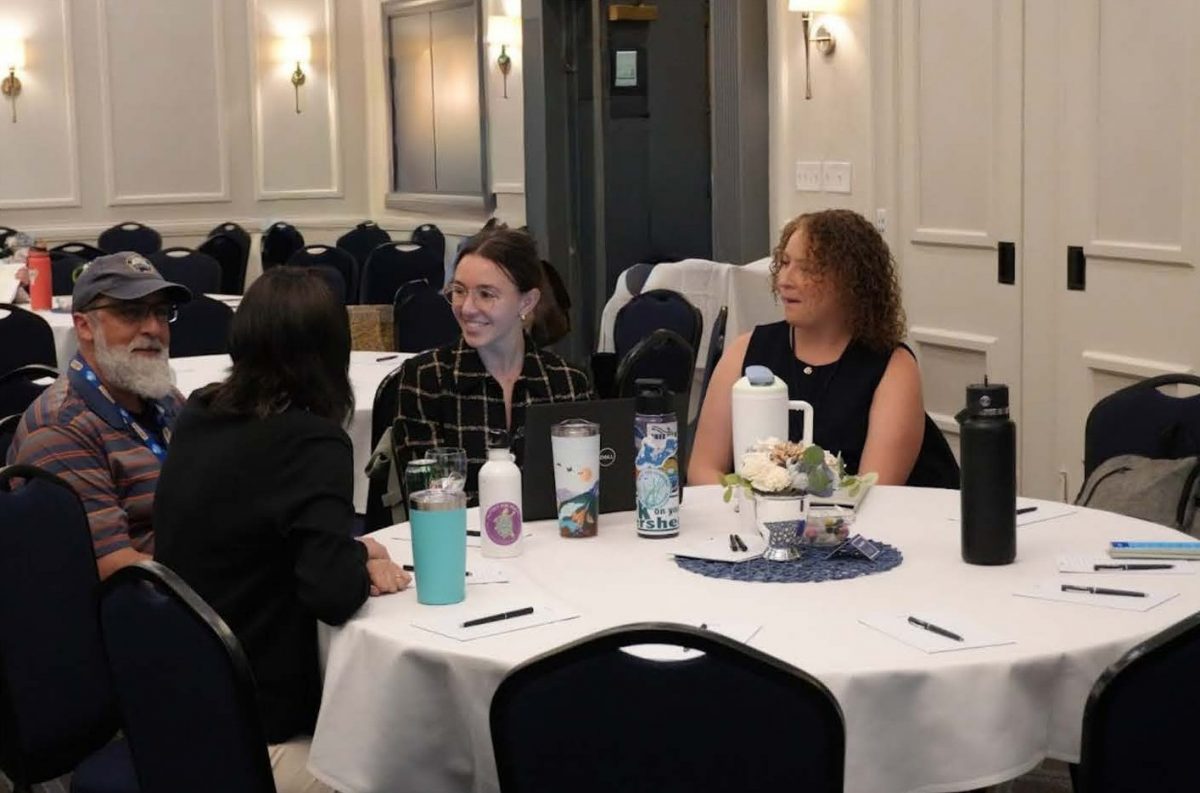
Other presentations touched on the effects of warming waters on an ecosystem and new ways to educate audiences on how they can support their environment.
Like several newly released interactive tools funded by the Long Island Sound Partnership, artificial intelligence has recently emerged to help researchers push their science to the next level. That was the main takeaway from day two’s plenary address, Why AI Matters?, given by Dr. Hendrik Hamann, professor of atmospheric science at Stony Brook University and AI Chief Scientist at Brookhaven National Laboratory. Dr. Hamann provided examples of how artificial intelligence can boost pre-existing research with its prediction abilities.
Later presentations touched on the state of shellfish in the Sound and innovative efforts to keep coastal communities healthy.
While researchers continue to find new and effective ways to address changes in the Long Island Sound, the conference underscored the importance of preserving the Sound for future generations.
Partners will gather for the next chapter of the Sound’s progress in 2028.
—From the staff of the Long Island Sound Partnership