 Laboratory analysis of kelp samples from five Long Island Sound farms shows that the native seaweed can be a nutritious, low-risk food to add to a healthy diet.
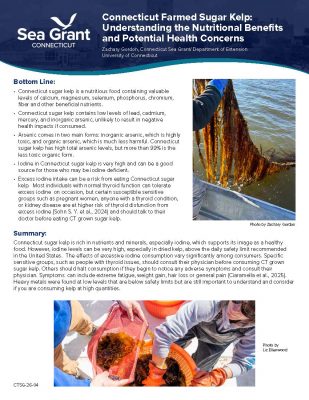
The test results are described in “Connecticut Farmed Sugar Kelp: Understanding the Nutritional Benefits and Potential Health Concerns,” a fact sheet now available from Connecticut Sea Grant and UConn Extension.
The analysis shows that Connecticut farmed kelp is a good source of calcium, magnesium, selenium, phosphorous, fiber and other nutrients. At the same time, the content of lead, inorganic arsenic and other heavy metals is well below levels of concern. Kelp was found to contain high levels of iodine, making it a good source for those who are iodine deficient, but a potential risk for sensitive groups including pregnant women and those with kidney disease or thyroid disfunction. Although pregnant women often need additional iodine, excess intake can be harmful; raw sugar kelp may contain up to 28,000 µg of iodine per serving, far exceeding the recommended pregnancy intake (250 µg/day) and U.S. upper limit (1,100 µg/day).
The fact sheet was reviewed by independent experts. The analysis was conducted by the Connecticut Agricultural Experiment Station and two commercial labs.
“Sugar kelp has been advertised widely as a nutritious and healthy food, and this testing confirmed that and showed Connecticut sugar kelp can stand out as healthy and safe,” said Zachary Gordon, lead author of the fact sheet. Gordon is an assistant extension educator at Connecticut Sea Grant who focuses on seaweed aquaculture and seafood safety.
The analysis was commissioned by Connecticut Sea Grant as part of ongoing efforts to advance kelp aquaculture in Connecticut as a healthy, sustainable and environmentally friendly crop in Long Island Sound and other U.S. waters. Recent achievements include the creation of the Connecticut Sea Grant mobile seaweed lab, where kelp seed has been successfully grown; participation in last month’s Kelp Fest events; and publication of the Business Planning for Kelp Farming guide for kelp farmers. Connecticut Sea Grant also led the creation of the National Seaweed Hub in 2020. The hub is a science-based, non-advocacy resource for the domestic seaweed aquaculture industry and associated sectors that serves as a mechanism to address emerging challenges, share information, foster collaboration and ensure resources developed in response to various stakeholder needs are publicly accessible. Twelve state-based Sea Grant programs are partners in the hub.
“Having this information organized and verified is really helpful,” said Suzie Flores, co-owner of the Stonington Kelp Co. with her husband Jay Douglas. “My biggest struggle as a farmer is getting people excited about kelp—and the first step to getting them excited is getting them informed.”
Sylvain De Guise, director of Connecticut Sea Grant, highlighted the practical value of the research the fact sheet was based on.
“While it is common for the outcome of research projects to end up in scientific journals, I am happy to see this important information in a fact sheet format that is easily understandable so it can inform consumers’ decision making,” he said.
Download the pdf by clicking here.