Story and photos by Judy Benson
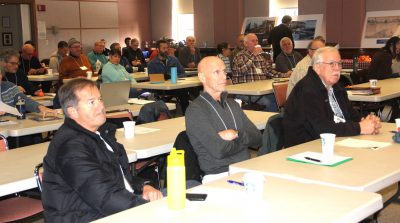
Keeping Connecticut’s oyster and clam populations healthy and accessible for recreational and commercial harvest is no simple task.
Just ask the approximately 60 volunteer overseers of shellfishing in their towns who attended the Jan. 24 Annual Gathering of Shellfish Commissions. They heard presentations on topics ranging from eelgrass restoration efforts to non-native European flat oyster sightings, new training protocols for water samplers to pesticides and PFAS questions and coastal development pressures impacting shellfish beds. Added to the mix were updates on shell recycling, harmful algal blooms, research into declining quahog populations and data collection for an economic analysis of recreational shellfishing.
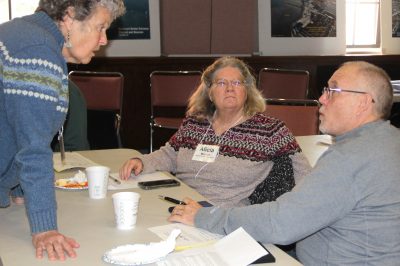
“I’ve been attending this meeting for six years, and I always learn something,” said one shellfish commissioner, addressing fellow members during the meeting at the Connecticut Agricultural Experiment Station in New Haven.
Hosted by Connecticut Sea Grant and the state Department of Agriculture Bureau of Aquaculture, the meeting began with an overview of new training protocols for what is arguably the most important job of municipal shellfish commission members—collecting water samples regularly from shellfish beds to ensure the bivalves are safe for harvest.
“We’ve had kind of a hodgepodge of training, so we decided to create a standardized training program that will be required for all new samplers,” said Alissa Dragan, supervising environmental analyst at the Bureau of Aquaculture.
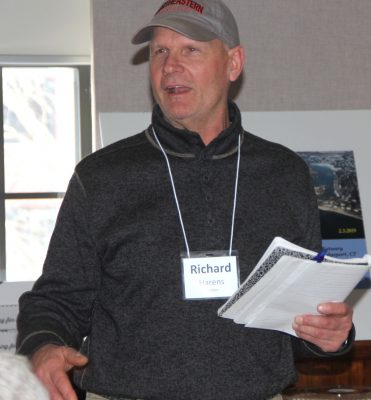
The training has two components: an online, self-guided course followed by a quiz, and an on-water portion in which bureau staff observe students collecting samples.
Lydia Bienlien, state bivalve shellfish pathologist, addressed the well-publicized finding of a European flat oyster in Connecticut waters this summer and its possible implications. Close attention needs to be paid to this oyster, she said, as with any non-native organism there is the possibility that it could introduce new pathogens to native oysters or start reproducing and outcompete. A second non-native species, the Manila clam, has recently been found in Massachusetts waters, so people should also be alert to the potential for them to be in Connecticut. Bienlien stressed that there is a difference, however, between non-native and invasive organisms and at this point the Bureau has no indication that the observation of one solitary oyster would result in negative consequences to local populations.
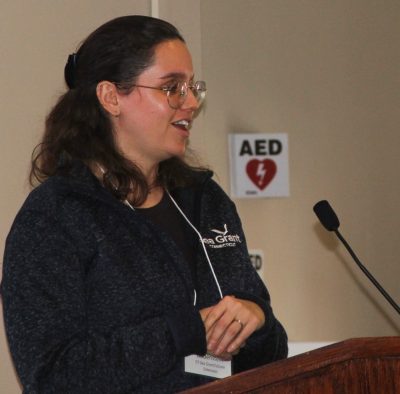
“We have a shellfish population in Connecticut that is very healthy,” she said. “That’s why we’re asking for everyone’s help. If you find one of these, contact us. Tell us what condition it’s in. Do not throw it back.”
Anyone who finds either of these species, or anything else unusual, she said, should contact her at: Lydia.bienlien@ct.gov.
Later in the meeting, representatives of each of the commissions present gave updates on annual permit sales, successes and setbacks in openings and closings of shellfish grounds, and new and ongoing outreach events.
John D’Agostino shared how the Guilford commission has several new members who have brought new energy to the group. For the annual town parade, they towed the commission’s boat while he rode onboard wielding a clam rake and singing songs from The Little Mermaid.

“We did our first ‘learn to clam jam,’” he said. “One hundred people showed up. We’re planning to make that an annual event.”
Tessa Getchis, CT Sea Grant’s Extension Program leader and organizer of the gathering, said she was pleased with this year’s strong turnout, the thoughtful questions raised by commissioners and the feeling of comradery shared across the 16 shoreline towns with shellfish programs.
“Shellfish commission members are at the center of Connecticut’s recreational shellfish fishery,” she said. “They work tirelessly to promote clean water and healthy coastal ecosystem so that the public can enjoy this culturally important maritime activity.”